
 Home
Home About
About Technical team
 Business
 Innovation
 Sponge society
 Cooperation
 News
News Contact
© Zhonguancun Sponge Ctry Engineering Research Institute
Beijing Water Science and Technology Research Institute of sponge water saving first trial, four highlights design significant results
Publish date:2019/03/28 Click count:502 次
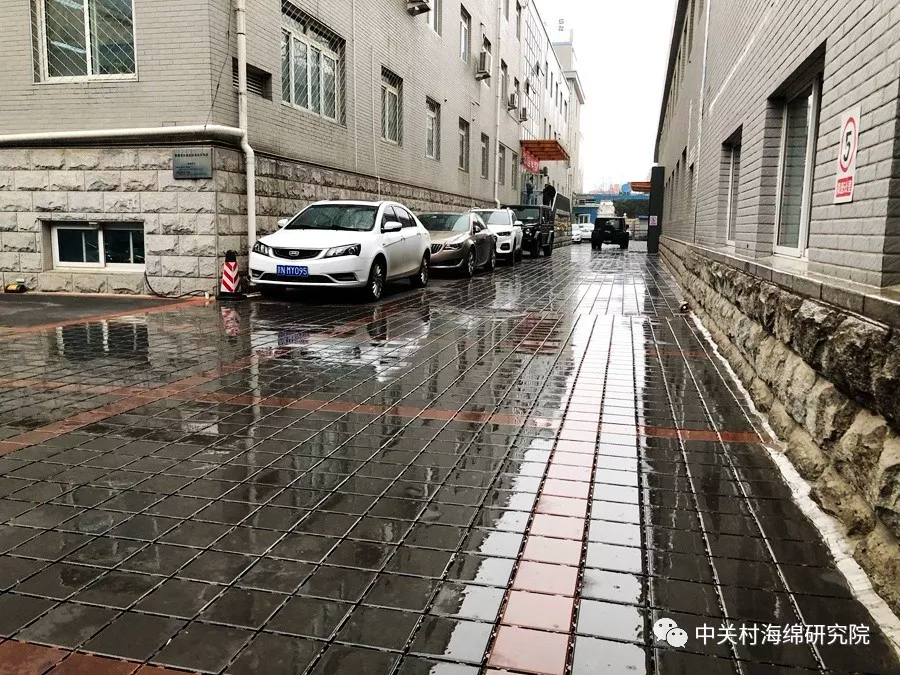
Spring breeze is at dawn, leisurely, with a rumbling thunder, a spring rain comes quietly, moistening all things, this is the earliest spring thunder since 1951. After the completion of the sponge water-saving experiment demonstration project in the courtyard of Beijing Academy of water science and technology, it experienced the first baptism in this vigorous spring.
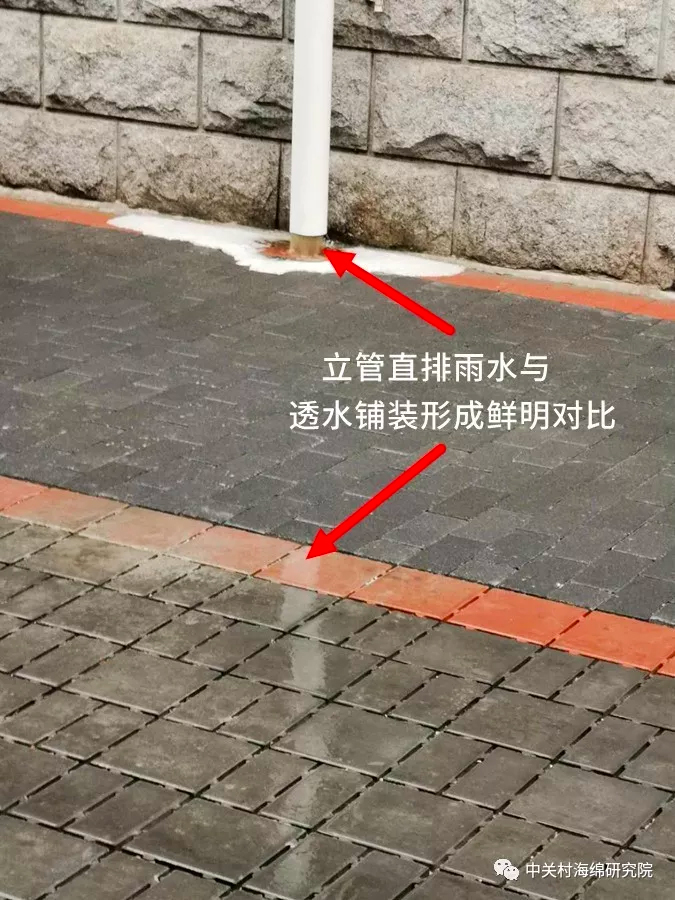
The rainfall is small and there is no obvious runoff on the ground. The rainwater slowly flows into the rainwater collection pool through the infiltration collection pipe set under the permeable pavement. During the reconstruction of the project, there is no rainwater inlet and rainwater pipeline, but the rainwater can not be discharged once in two years for 24 hours, thanks to the following design ideas, process flow and four design highlights.
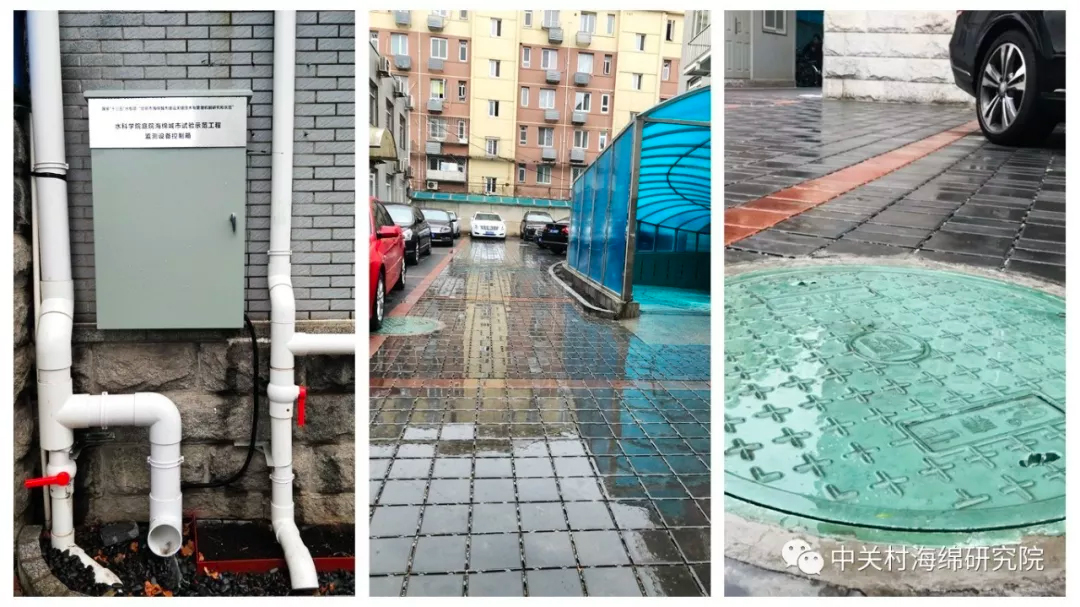
Design idea:
The technical measures of roof rainwater storage, surface rainwater infiltration, underground rainwater storage and surface rainwater reuse are adopted to realize multi-level rainwater control in the community. At the same time, the experimental area should be set up according to local conditions to realize the combination of engineering and scientific research.
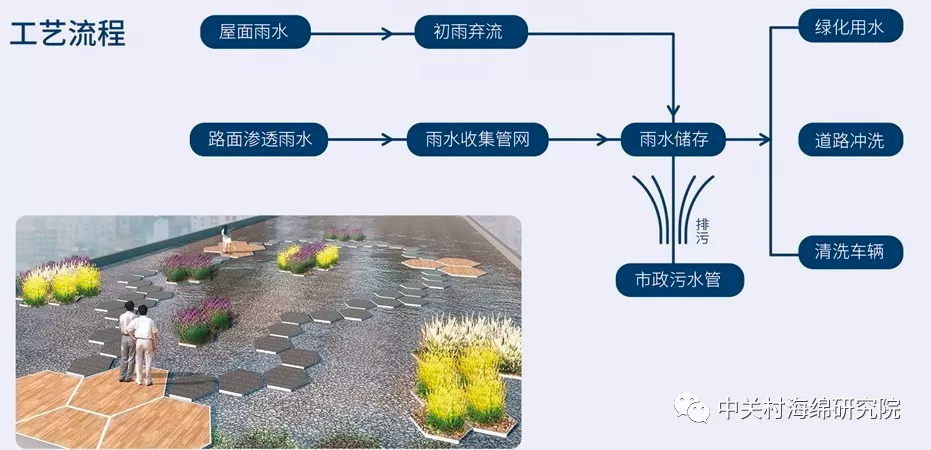
technological process:
After the purification of the initial abandoned flow and permeable pavement, the rainwater is collected to the water storage tank by evenly arranging the forehead perforated pipe at the bottom layer, which is used as the non-traditional water source for vehicle washing, greening, road sprinkling, etc. it is one of the important measures for water conservation.
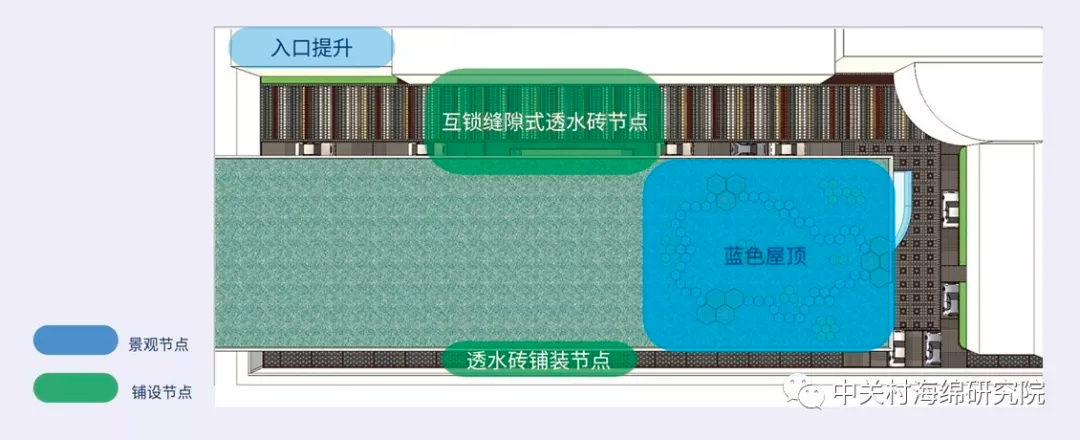
Design highlights
Highlight 1: adopt diversified permeable pavement forms to organically combine sponge city demonstration and experimental research in the Institute.
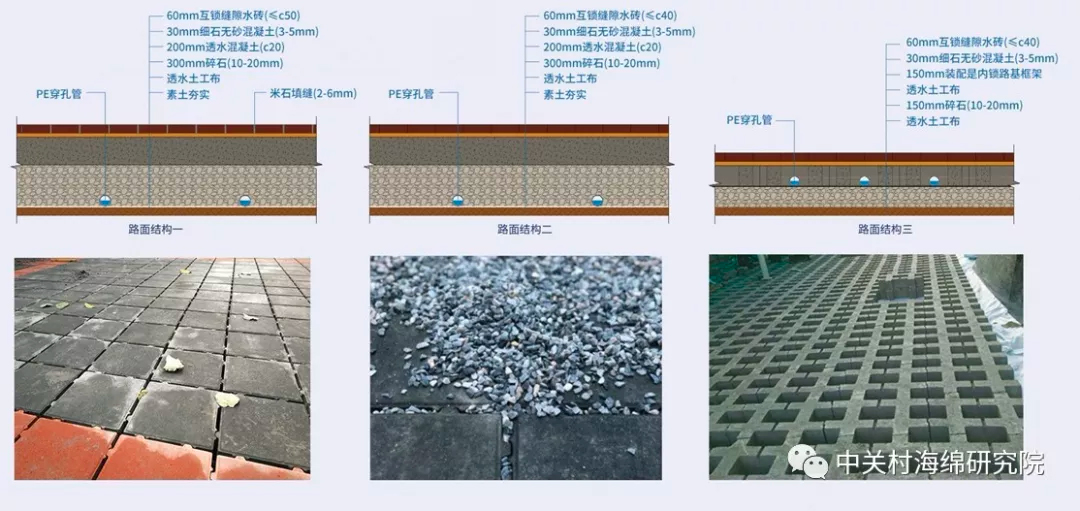
Highlight 2:The permeable layer is equipped with permeable pipes, which use the filtration function of the permeable layer to collect clean rainwater and store it in the modular rainwater collection pool for car washing, greening and road washing in the hospital.
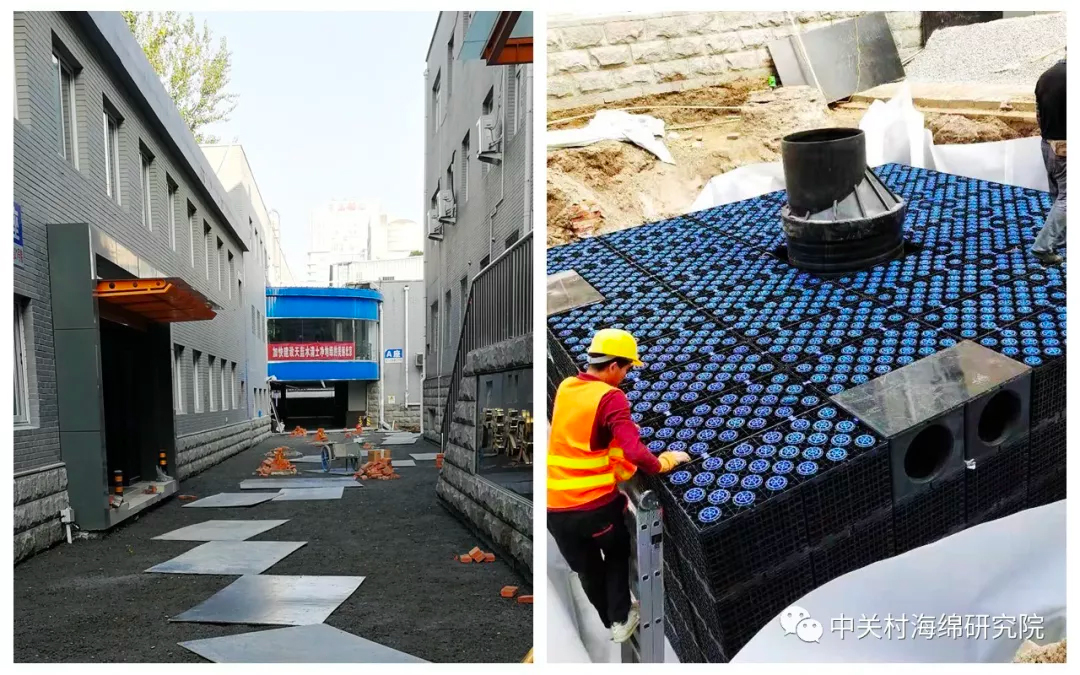
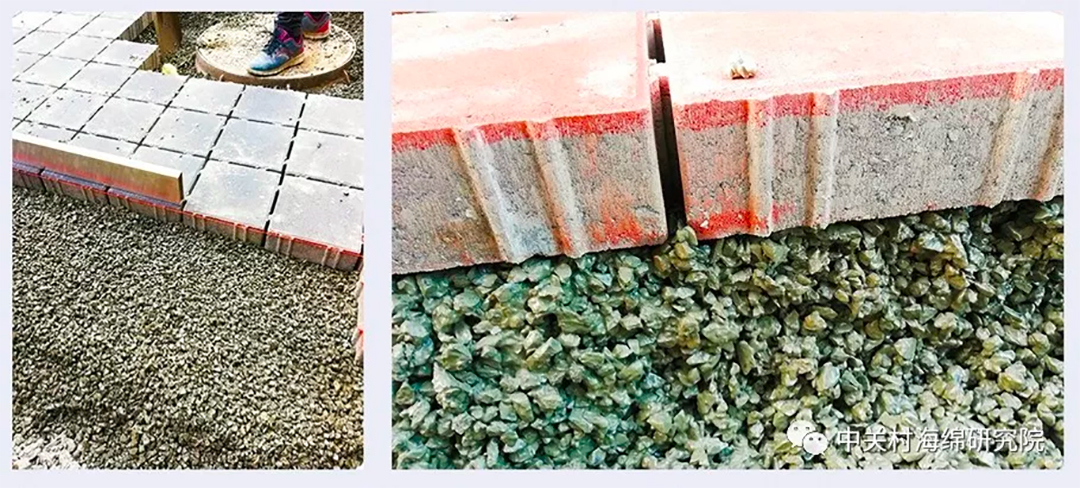
Highlight 3: fine stone sand free concrete is used instead of dry and hard mortar as leveling layer, which greatly improves the water permeability of permeable pavement.
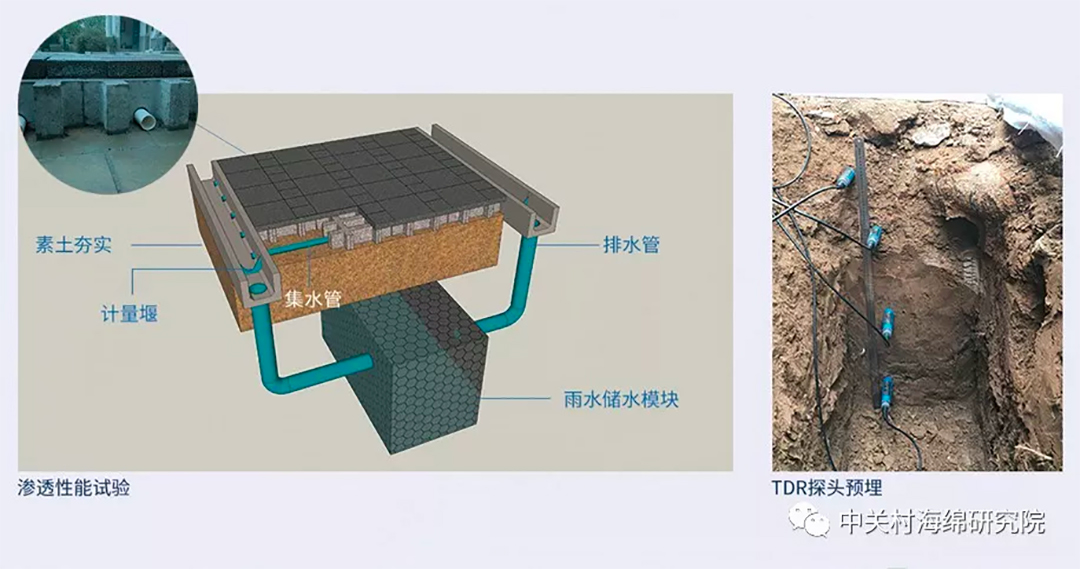
Highlight 4: the project area is equipped with rainwater permeability test monitoring area and embedded soil moisture monitoring probe to provide reliable data for scientific research.
Construction effect and significance
Through the implementation of the sponge test demonstration project, the problem of ponding in the Department of the Academy of water sciences has been completely solved, and the recovery and utilization of rainwater has been realized, which provides a reproducible and popularized construction mode for the implementation of sponge transformation and the creation of water-saving units in the government departments.
Project background
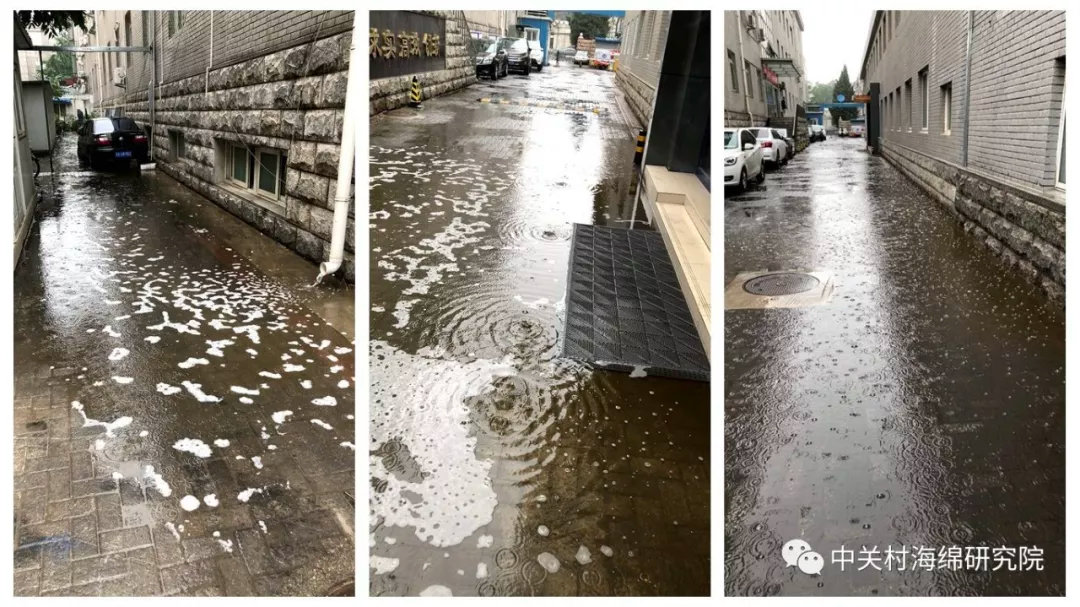
The original permeable brick in the Academy of water sciences has been used for many years, and its permeability has declined, and the road surface has been rolled by vehicles for many years, forming local ponding after rainfall, which affects the passage of staff in the Academy. In view of the above situation, in 2018, the leaders of the Institute put people first and carried out the sponge water-saving transformation of the headquarters of the Institute. At the same time, as the undertaking unit of the 13th five year water project "research and demonstration of key technology and management mechanism of Beijing sponge city construction", the Academy of water sciences, in combination with the research needs of the project, adopts the "multi-level rainwater runoff comprehensive regulation sponge city construction technology" in the project to realize the once-in-a-two-year rainwater is not discharged. At the same time, a number of monitoring points are set up in the process of project transformation to provide research data support for the water project.
-

 010-68731953
 -



-


-

